At first glance, the definition of art may seem straightforward and easy to grasp. One could say that art is a way people express themselves creatively. And this would not be wrong. However, the layeredness of art might imply a more complex definition.
What’s interesting, this question remains open, probably because of its abstract and often subjective nature. At the same time, this provides an opportunity to scrutinize this question and get closer to the truth – at least, in one’s own way. This is precisely what this article aims to do.
Common Definitions of Art
Let’s put together the key art definitions so that we can assemble the universal answer.
“The making of objects, images, music, etc. that are beautiful or that express feelings.” – Cambridge Dictionary
“The conscious use of skill and creative imagination especially in the production of aesthetic objects.” – Merriam-Webster Dictionary
“A work of art in the classificatory sense is an artifact (or set of artifacts) which has had conferred upon it the status of candidate for appreciation by some person or persons acting on behalf of a certain social institution (the artworld).” – George Dickie, The New Institutional Theory of Art, 1989.
George Dickie proposed the institutional theory of art, which suggests that a work of art is something presented by an artist to an artworld public. He emphasizes the role of the art institution in conferring the status of “art” upon an object.
“Art is the creation of forms symbolic of human feeling, forms that, by analogy, communicate to us our own emotions and awareness.” – Susanne Langer, Philosophy in a New Key: A Study in the Symbolism of Reason, Rite, and Art, 1942.
Susanne Langer views art as the creation of symbolic forms that express human emotions. These forms, by analogy, communicate to us our own emotions and awareness. This makes art a medium for the expression and understanding of feelings.
“Art is an activity or process the end product of which is an artwork that functions in certain ways for certain people.” – Monroe Beardsley, Aesthetics: Problems in the Philosophy of Criticism, 1981.
According to Beardsley, the artwork’s function is a crucial aspect. Artworks are created with certain purposes or functions, and these functions are realized when specific individuals experience the artwork. The functions include aesthetic pleasure, emotional impact, or intellectual engagement.
“Art is embodied meaning.” – Arthur C. Danto, The Transfiguration of the Commonplace: A Philosophy of Art, 1981.
Danto succinctly states that art is “embodied meaning.” His perspective suggests that art goes beyond mere representation and carries inherent meaning within its physical form, inviting viewers to engage with and interpret that meaning.
Here are a few more thoughts about art to reflect upon.
“Art is the lie that enables us to realize the truth.” – Roland Penrose, Picasso: His Life and Work, 1959.
“Without art, the crudeness of reality would make the world unbearable.” – George Bernard Shaw, Back to Methuselah, 1921.
“The aim of art is to represent not the outward appearance of things, but their inward significance.” – Aristotle, Poetics, around 330 BCE.
“Beautiful is that which pleases universally without a concept.” – Immanuel Kant, Critique of Judgment, 1790.
Together, these perspectives on art highlight its transformative, comforting, revelatory, and universally resonant qualities. Art is like a mirror – it shows different reflections depending on who is looking at it.
Key Functions of Art
Art seems incompatible with functionality, doesn’t it? Nevertheless, it performs roles that have a huge impact on people’s lives in several contexts. Art functions can be defined as
- Aesthetic
- Educational
- Social
- Physical
Aesthetic Function of Art
Art is commonly associated with beauty, which puts meaning in a secondary place. Starting from Ancient Greece, aesthetics has revolved around proportion, harmony, and some kind of standard beauty.
Chiara Leonardi, a Doctor of Philosophy, emphasized, “The fundamental difference between art and beauty is that art is about who has produced it, whereas beauty depends on who’s looking.” Consequently, there is beauty in every piece of art, but not everyone can see it. Or rather, this beauty can be different for each spectator – we perceive art through the prism of our feelings, experiences, and knowledge.
Traditionally, artists strive to craft visually or aurally pleasing experiences. They use various techniques, styles, and media to engage the senses and provide audiences with aesthetic enjoyment. This pursuit of beauty and sensory pleasure is a foundational aspect of the aesthetic function of art.
Art often has a decorative function, making spaces more visually appealing. But its role is more than just decoration. Art shapes the way we experience our surroundings; it creates moods, highlights details, and reflects the culture and values of a place. That’s why art affects both what we see and how we feel in a space.
At the same time, art is a form of self-expression. Artists use their work to communicate emotions, thoughts, and personal experiences. This makes the aesthetic experience of art deeper and more complex. When we look at a painting, sculpture, or installation, besides shapes and colors, we also sense the artist’s perspective, their choices, and their feelings. The aesthetic function of art is therefore both about beauty and about connection: it engages our senses while inviting us to understand and reflect on the world as the artist sees it.
Educational Function of Art
Leonardo da Vinci said, “Art is the queen of all sciences, communicating knowledge to all the generations of the world.” Indeed, the educational function of art contributes to our intellectual, emotional, and social development.
Art activates cognitive processes, such as observation, analysis, and problem-solving. Through visual interpretation and creative thinking, we enrich our cognitive skills and develop a deeper understanding of the world. The emotional engagement with art, instead, fosters self-awareness, empathy, and insight into the artist’s own emotions and the emotions of others.
Also, art offers a window into diverse cultures, historical periods, and human experiences. The study of historical art periods gives us cultural awareness and lets us see the broader context of art.
Social Function of Art
Art interacts with society in ways that are subtle, complex, and often unexpected. It can reveal what it fears, ignores, or represses. Through its forms and gestures, art creates spaces for dialogue that are not always verbal or logical. A mural, a performance, or even a seemingly private artwork can expose social tensions, highlight contradictions, and make visible experiences that might otherwise remain hidden.
Artists often work at the edges of social norms, not just to protest, but to reimagine the possibilities of social life. Their work can unsettle habitual ways of seeing, challenge assumptions, and open new perspectives on relationships, hierarchies, and collective behavior. Marginalized or underrepresented groups can use different art forms to share their stories, challenges, and aspirations. Art, in its social role, is less a mirror and more a prism: it refracts experience, revealing layers of meaning that might otherwise go unnoticed. Movements like Arte Povera exemplify this approach – they use everyday, “poor” materials to question consumerism, institutional authority, and the boundaries between art and life.
Physical Function of Art
Artistic creation involves a tactile process, where artists manipulate various materials, such as paint, clay, metal, and fabric, to bring their visions to life. They express themselves through the very act of shaping and forming.
For the audience, engaging with art often involves a multi-sensory experience. The texture of a painting, the weight of a sculpture, the rhythm in a musical composition — all these elements contribute to the physical engagement with the artwork. The choice of materials and techniques can evoke specific sensations.
How to Understand Art?
Understanding art involves engaging with it on a personal and reflective level. However, art is not always as accessible and responsive as we might want it to be. Sometimes, no matter how hard we try to understand an artwork, it holds no meaning for us. The following principles will help to understand art better.
- Rather than seeking a single, “correct” interpretation, approach art with an open mind. Allow your thoughts, emotions, and experiences to guide your understanding.
- Take the time to observe details, consider the artist’s intent, and explore the cultural and historical context. As per John Dewey, “In order to understand the esthetic in its ultimate and approved forms, one must begin with it in the raw.”
- Be open to different perspectives and interpretations, recognizing that art is subjective and can evoke diverse reactions.
- Talk with others, whether artists, critics, or fellow viewers, to broaden your understanding of art.
We should trust our instincts and understand that there are multiple valid ways to understand and appreciate art.
Why Do People Make Art?
James Sturm, a famous American cartoonist, believes that there are no reasons why artists create art. He says, “So whether attempting to make art is noble or selfish, the fact remains that I will do it nevertheless. Anything past this statement is speculation”.
Indeed, determining the reasons for making art is as challenging as pinning down the definition of art itself. Some do it to express emotions, convey ideas, or communicate cultural identity. Others simply enjoy the process. There could be a thousand other, including the most unexpected, reasons for creating art.
Craving for beauty has always been present in human life, notwithstanding the time or conditions of living. But besides aesthetic motivations, there are many more, whether philosophical or practical, reasons prompting people to create art. We might assume that those reasons are closely related to art functions. The functions of art seem clear enough. Yet, the reasons inspiring people to create art are much vaguer because of the excessive subjectivity of this matter.
In his prominent work “Art as Experience”, John Dewey studied the contemporary separation of art from ordinary life. Here’s what he said: “Domestic utensils, furnishings of tent and house, rugs, mats, jars, pots, bows, spears, were wrought with such delighted care that today we hunt them out and give them places of honor in our art museums. Yet in their own time and place, such things were enhancements of the processes of everyday life.” Minimalism is undoubtedly thriving these days, and pretty little details keep vanishing from people’s everyday usage. This seems to be another catalyst for the pursuit of art.
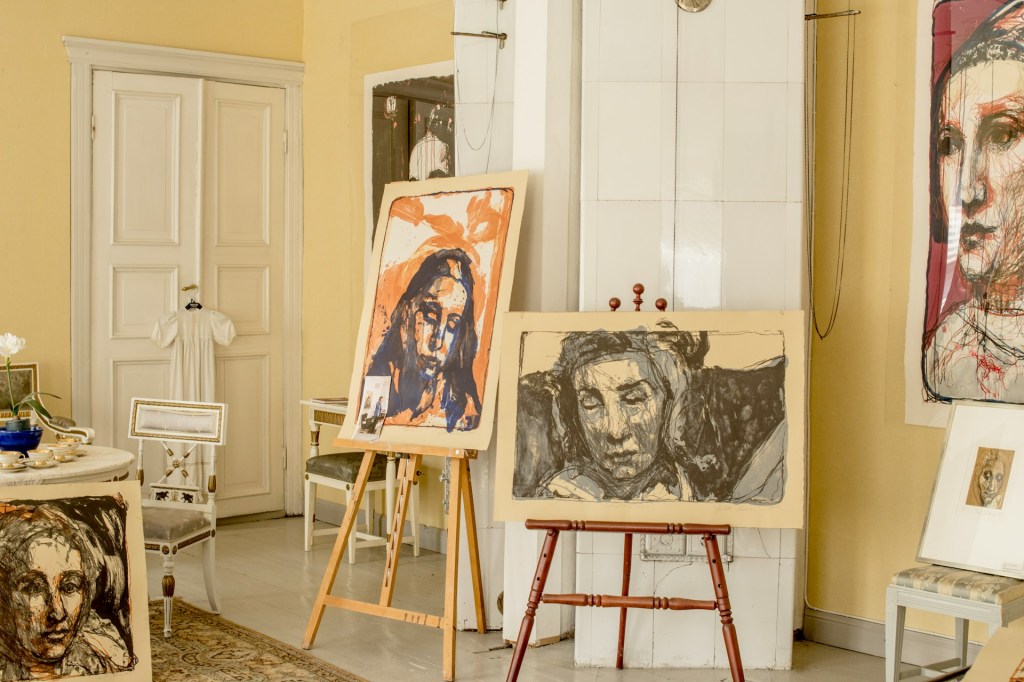
You could always create your own definition of art, and, as a matter of fact, it largely depends on your experience in both life and art. What is art to you?.. A painting, a sculpture? Or… a shirt with a coffee stain on it? A leaf touched by a wind gust? A smoking cigarette held between two fingers? Trying to answer unanswerable questions is diverting and rewarding in some way, and the question “What is art?” seems the one.
Be sure to define art in your personal way in the comments.
 Artenquire