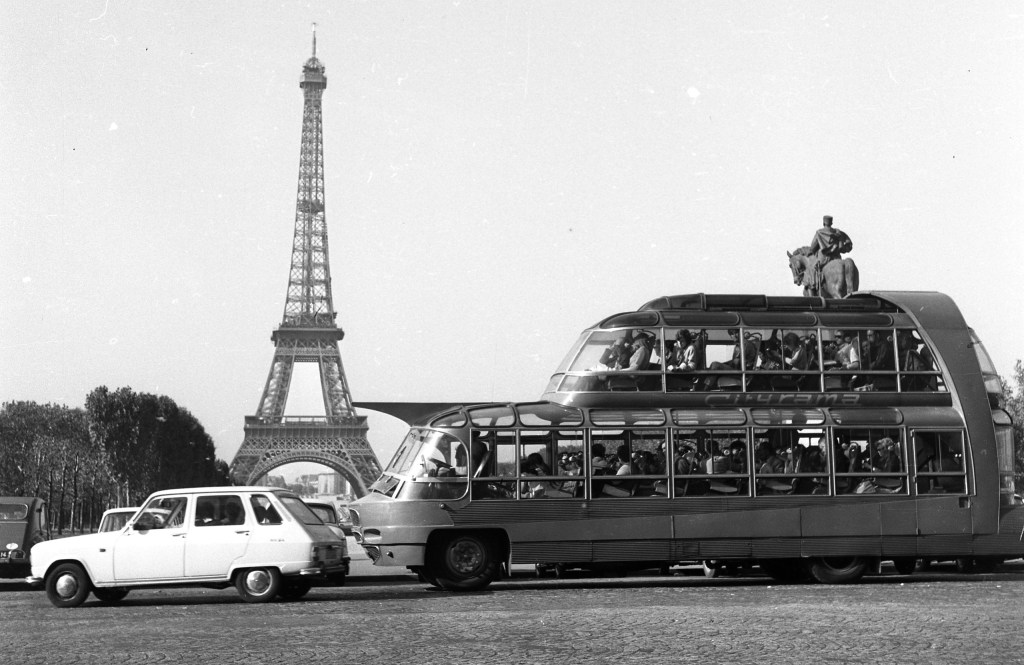
The Eiffel Tower was originally built for the 1889 World’s Fair to celebrate French industrial prowess and innovation. Although initially intended to be a temporary exhibit, it became useful as a radiotelegraph station during World War I. Its role in scientific experiments also ensured its longevity and relevance.
The tower has had a profound cultural and social impact. It quickly became a symbol of French identity, featured prominently in art, literature, and cinema. Its iconic status continues to draw millions of visitors annually. This makes it a significant tourist attraction that contributes substantially to Paris’s economy.
"The Eiffel Tower… a symbol of Paris, a structure so familiar that it almost seems invisible until you see it for the first time."Julian Barnes, A History of the World in 10½ Chapters (1989)
How the Idea of the Eiffel Tower Emerged
The driving force behind the idea to build the Eiffel Tower was the Exposition Universelle, held in Paris in 1889. This World’s Fair was organized to celebrate the 100th anniversary of the French Revolution. The French government wished to create a grand centerpiece to symbolize the nation’s progress and modernity.
Gustave Eiffel’s Role
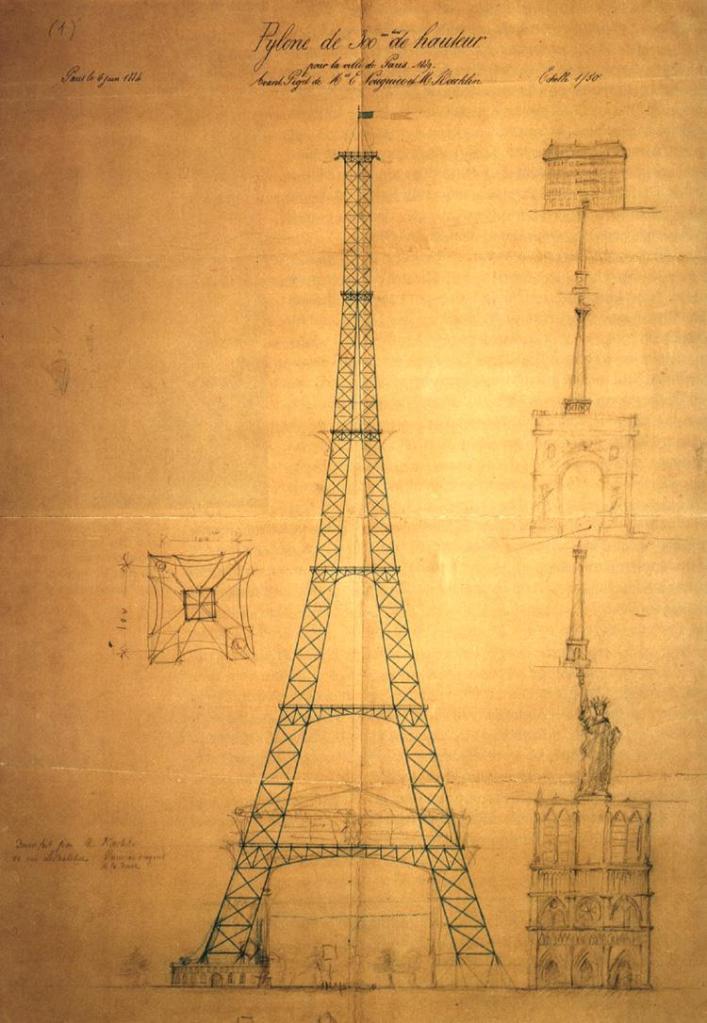
Gustave Eiffel was a prominent engineer known for his work on bridges and viaducts. He was the head of the company that would eventually design and construct the tower. The initial concept for the tower was developed by Maurice Koechlin and Émile Nouguier, two senior engineers working for Eiffel. They envisioned a tall, wrought-iron structure that would demonstrate the capabilities of French engineering and ironwork.
Architectural Vision of the Eiffel Tower
The original sketches by Koechlin and Nouguier featured a four-legged structure rising to 300 meters (984 feet). This design aimed to combine structural strength with aesthetic appeal. Recognizing the potential of their idea, Eiffel brought in architect Stephen Sauvestre to refine the design. Sauvestre added decorative arches at the base, a glass pavilion on the first level, and other embellishments.
Submission and Approval
In 1884, Eiffel and his team submitted their design to the organizers of the Exposition Universelle. The proposal was initially met with skepticism. However, Eiffel’s reputation and the innovative nature of the design eventually won over the selection committee. On January 8, 1887, Eiffel’s company and the French government signed a contract. It granted Eiffel the right to build and operate the tower for 20 years. After this period, ownership would transfer to Paris.
Symbolic Purpose of the Eiffel Tower
The Eiffel Tower is more than just an architectural marvel. It was intended to symbolize the technological advances of the 19th century. It was meant to be a bold statement of France’s industrial capabilities and a testament to human ingenuity and progress. The tower also commemorated the centenary of the French Revolution. It linked the nation’s past achievements with its forward-looking aspirations.
It Wasn’t Easy
Despite its eventual success, the Eiffel Tower faced significant opposition from many prominent artists and intellectuals. They viewed it as an eyesore that would ruin the aesthetic harmony of Paris. However, Eiffel defended the project passionately and emphasized its technical innovations. He also highlighted the benefits it would bring to the city’s international reputation.
More About Gustave Eiffel
Can one think that because we are engineers, beauty does not preoccupy us or that we do not try to build beautiful, as well as solid and long lasting structures?… Besides, there is an attraction, a special charm in the colossal to which ordinary theories of art do not apply.
Gustave Eiffel
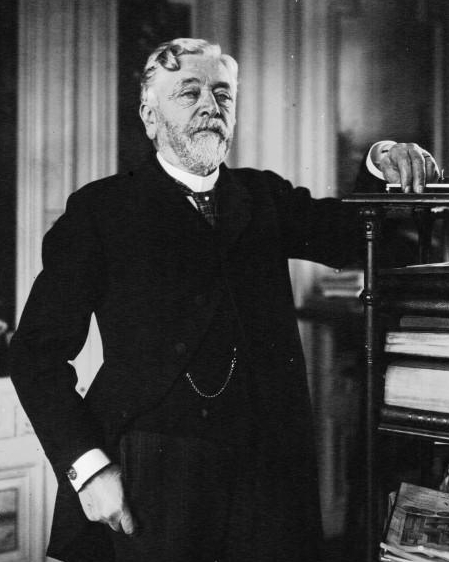
Gustave Eiffel (1832–1923) was a French civil engineer and architect who made innovative contributions to engineering. His work made him a prominent figure in architecture and construction. He was especially known for his use of iron during the late 19th and early 20th centuries.
Eiffel’s Career
Before the Eiffel Tower, Gustave Eiffel had already made a name for himself. He achieved this through his work on various bridges, railways, and other structural projects across Europe and Latin America. His first significant project was the Bordeaux Bridge. Built in 1858, this railway bridge helped establish his reputation as a skilled engineer.
Contributions to Engineering
Eiffel was known for his use of iron and metal in large-scale constructions. He developed techniques to create lighter yet stronger structures that could withstand considerable weight and stress. These designs were revolutionary for their time. His work emphasized functionality, precision, and innovation, and many of his projects involved prefabricated metal components.
Among his notable works is The Garabit Viaduct (1884), a bridge in southern France. It was the highest bridge in the world at the time. Another one is the internal structure of the Statue of Liberty (1886). Eiffel designed the iron framework for the Statue of Liberty. It helped the statue withstand high winds and environmental stress while supporting its weight.
The Eiffel Tower’s Concept and Design
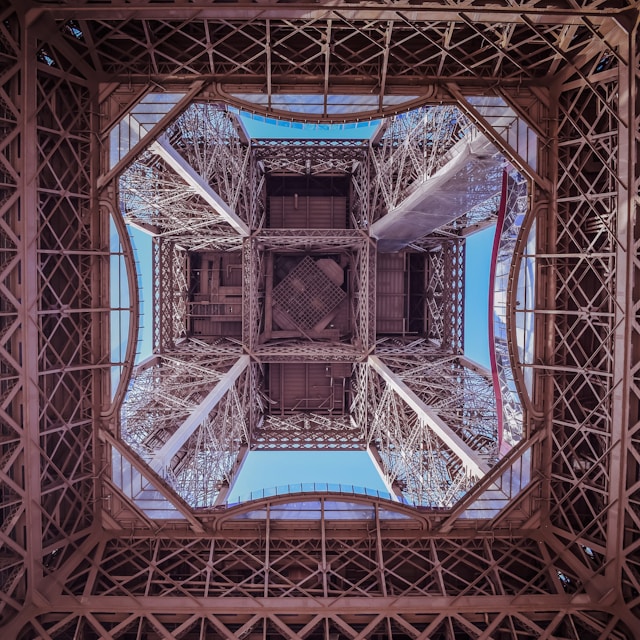
The Eiffel Tower’s design, conceived by Gustave Eiffel and his team, merges aesthetic elegance with engineering prowess. Its lattice iron structure, rising to 324 meters, was innovative for its time, featuring a mix of beauty and functionality. The open framework was a strategic choice to address wind resistance. It allowed winds to flow through and minimize stress on the structure. Inspired by the design principles of contemporary bridges, the tower represented a leap forward in architectural design.
Constructing the Giant
The construction of the Eiffel Tower was an impressive engineering achievement. Over 18,000 iron parts were used, joined by 2.5 million rivets. Wrought iron was crucial for its strength and lightweight properties for the tower’s height and stability. The assembly involved precise measurements and careful planning. The workers employed innovative techniques to erect the structure from the foundation up. Safety measures, including guardrails and harnesses, were introduced to protect the construction workers.
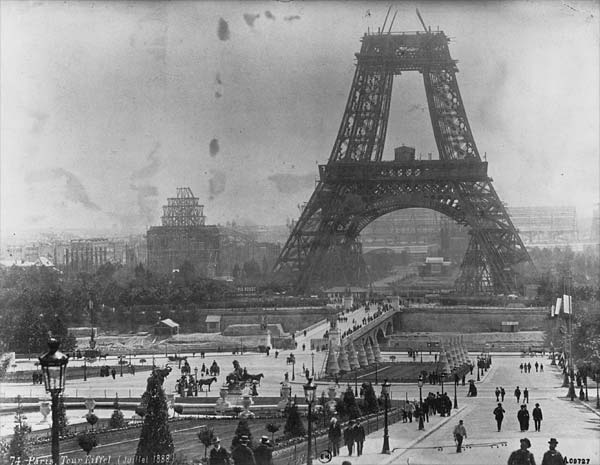
Technological innovations were integral to the tower’s success. The introduction of hydraulic elevators allowed visitors to ascend the structure. Electric lighting illuminated the tower, enhancing its nighttime visibility and aesthetic appeal. These advancements facilitated the tower’s functionality and set new standards for future engineering projects.
Symbolism of the Eiffel Tower
The Eiffel Tower is more than just an engineering marvel. It is a powerful symbol with layered meanings, reflecting its historical context and place in modern culture. Here’s an in-depth look at the symbolism associated with this iconic structure:
Symbol of French Industrial Prowess
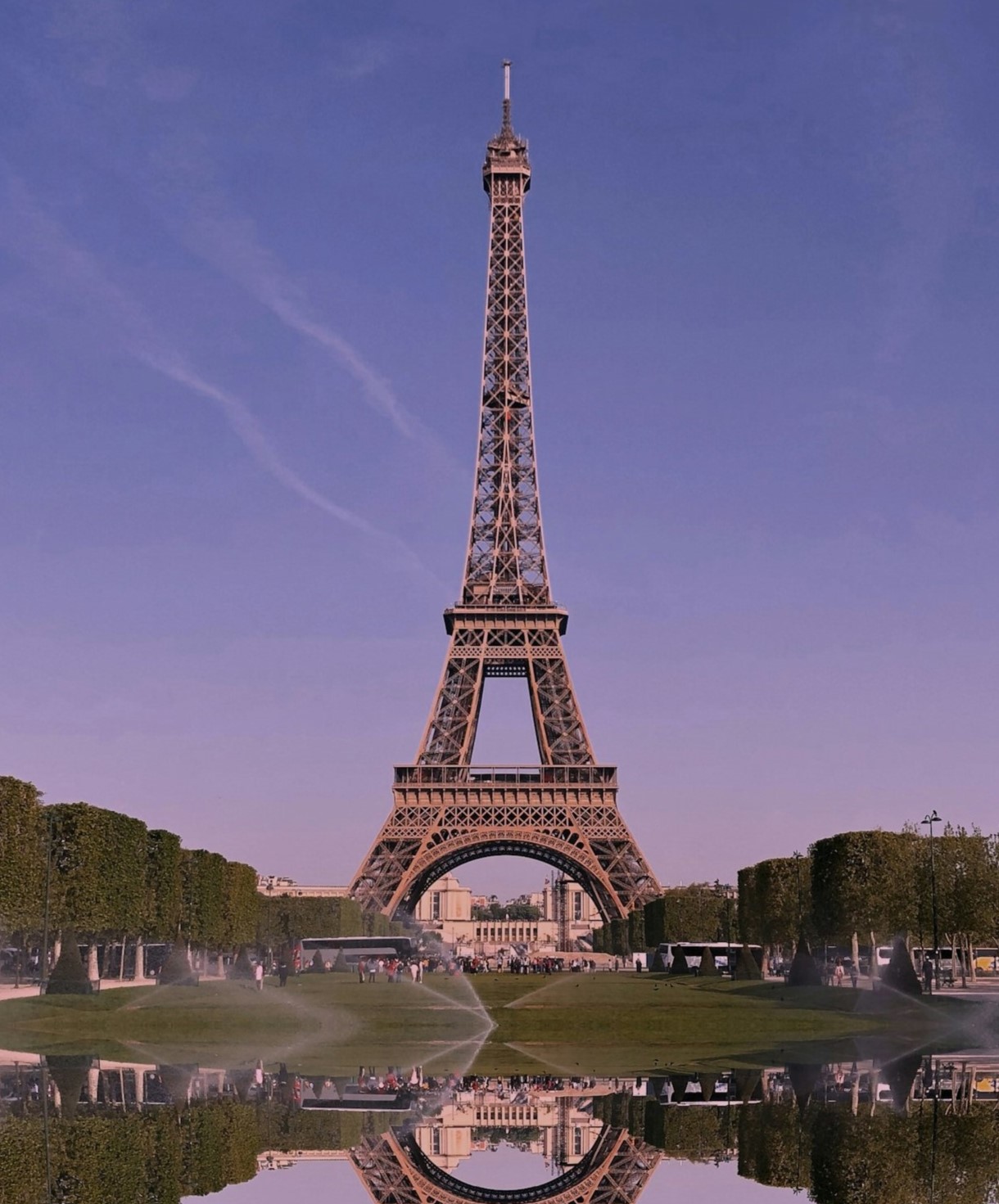
When the Eiffel Tower was constructed in 1889, it was intended to showcase France’s leadership in engineering and industrial progress. At the time, it was the tallest man-made structure in the world, symbolizing France’s technological advancements and industrial strength. Wrought iron, a relatively new material, demonstrated innovative engineering techniques and the possibilities of modern construction.
Emblem of Modernity and Progress
The Eiffel Tower also represents the spirit of modernity and progress. Its design departed from traditional architectural styles, embracing a new, more industrial aesthetic. The tower’s open lattice structure allowed it to rise to unprecedented heights. It became a symbol of the Industrial Age and the belief in progress and innovation as driving forces of society.
National Pride and Identity
The Eiffel Tower was built to celebrate the 100th anniversary of the French Revolution. It linked the country’s revolutionary past with its contemporary achievements. Over time, it has become a representation of French culture, creativity, and resilience. The tower’s status as a global icon of Paris reinforces its role as a national symbol.
Artistic and Cultural Icon
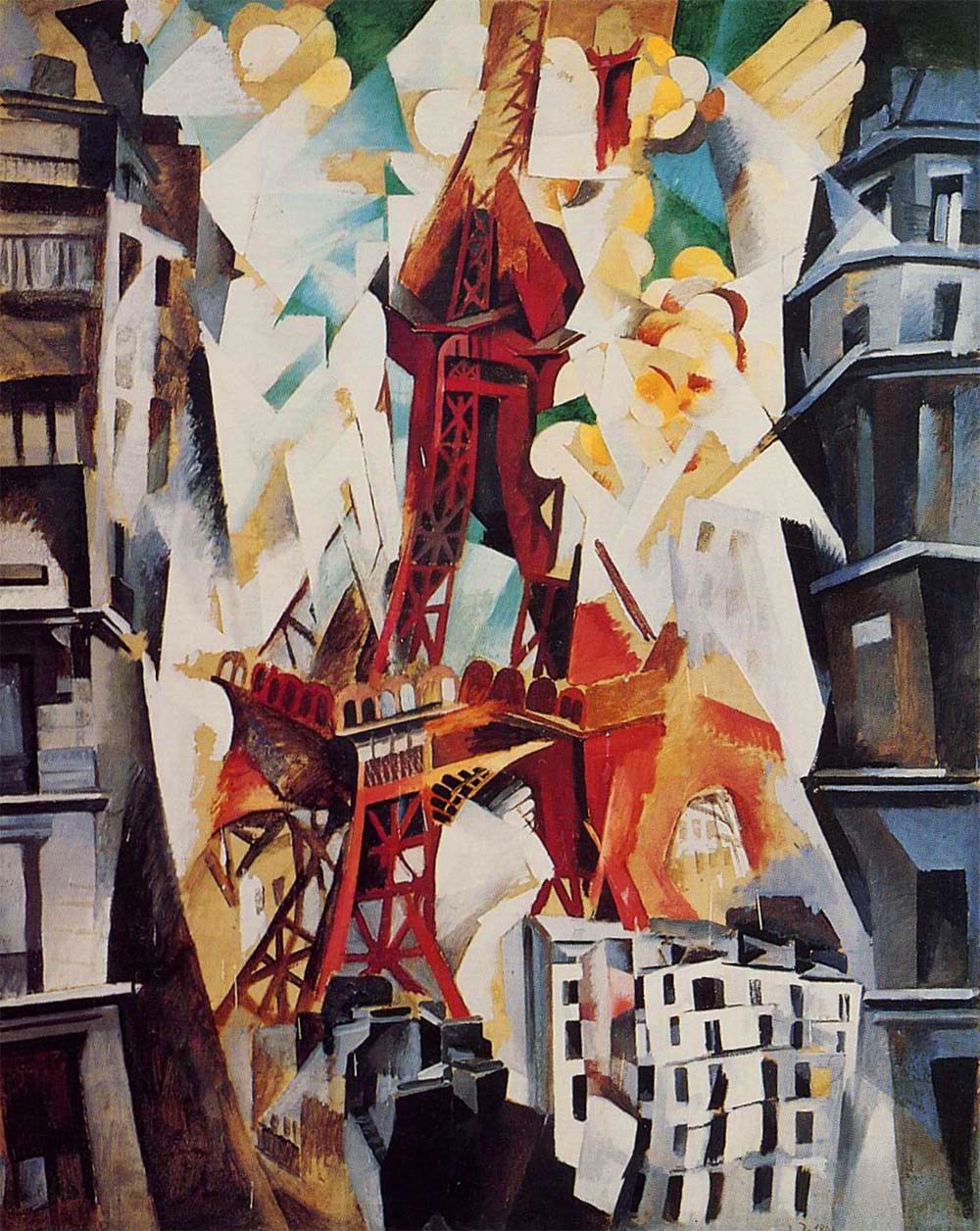
Beyond its industrial and national significance, the Eiffel Tower has become an artistic and cultural icon. It has inspired countless artists, writers, and filmmakers, appearing in various forms of art, literature, and cinema. The tower’s unique design and prominent position in Paris have made it a frequent subject of artistic interpretation.
Here’s a vibrant Robert Delaunay‘s series of the Eiffel Tower.



Global Unity and Connection
In the modern era, the Eiffel Tower has also come to symbolize global unity and connection. It represents the idea of shared human achievement and the interconnectedness of cultures. The Eiffel Tower is present in countless international media and is a global tourist destination. This highlights its status as a symbol of international cultural exchange and unity.
 Artenquire