
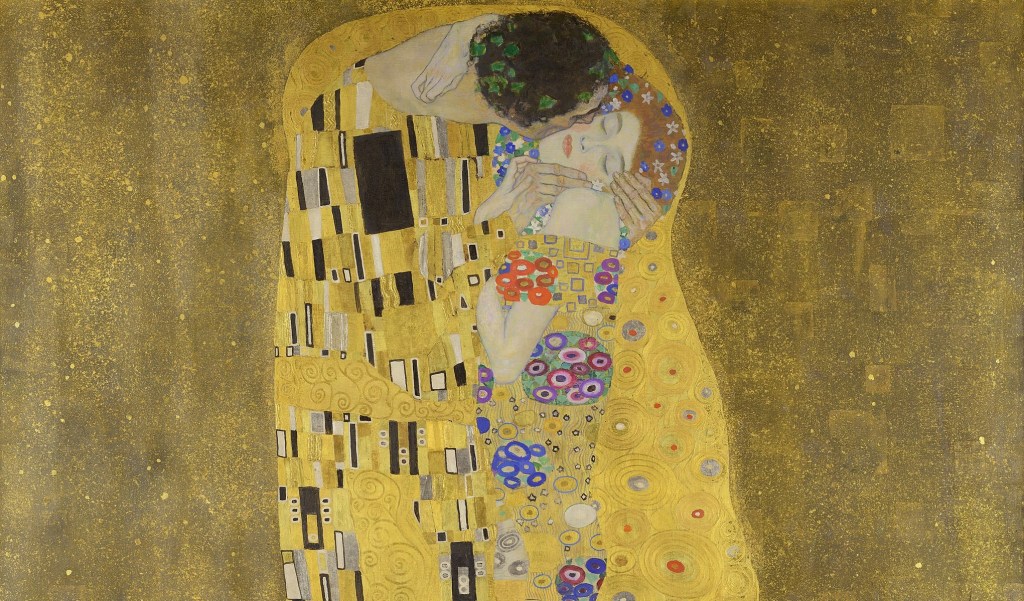
At the turn of the 20th century, in his studio at the Villa Oleander, in the heart of Vienna, Gustav Klimt painted The Kiss (1907-1908). This artwork became one of the most celebrated symbols of love and passion. Wrapped in shimmering gold and adorned with intricate patterns, this masterpiece captures an intimate moment between two lovers, frozen in an eternal embrace.

While some critics dismissed Klimt’s art as excessive or even scandalous, his unique fusion of Art Nouveau’s flowing lines, Byzantine mosaics’ opulence, and Japanese woodblock prints’ simplicity made his style unmistakable. Instead of merely portraying reality, Klimt transformed his paintings into ethereal, otherworldly visions, inviting viewers into a realm where love, desire, and spirituality intertwine. Among the masterpieces born from this revolutionary spirit was The Kiss.
The shimmering background and gilded robes of the lovers in The Kiss create a dreamlike atmosphere, blurring the line between reality and fantasy. This painting belongs to Klimt’s “Golden Phase” (1899–1910), a period where he experimented with gold leaf, influenced by his visit to the mosaics of Ravenna, Italy. There, he was captivated by the glittering Byzantine mosaics in churches like San Vitale. Rich gold tones and intricate detailing of these mosaics sparked a transformation in Klimt’s work. This change led him to create some of his most iconic pieces, including The Kiss and Portrait of Adele Bloch-Bauer I.
But Klimt’s genius lay not only in his use of gold. His compositions played with contrast and balance, blending sharp, geometric shapes, often linked to masculinity, with soft, flowing patterns that embodied femininity. The figures in his paintings carried an unmistakable sensuality. His art was filled with symbolism and eroticism, drawing from mythology, allegory, and the subconscious. Klimt often depicted women in a dreamlike trance, as if between fantasy and reality.
But who are the people painted in The Kiss? The couple’s identities in Gustav Klimt’s The Kiss have long intrigued art historians and enthusiasts. While the painting does not explicitly reveal their identities, several theories have emerged.
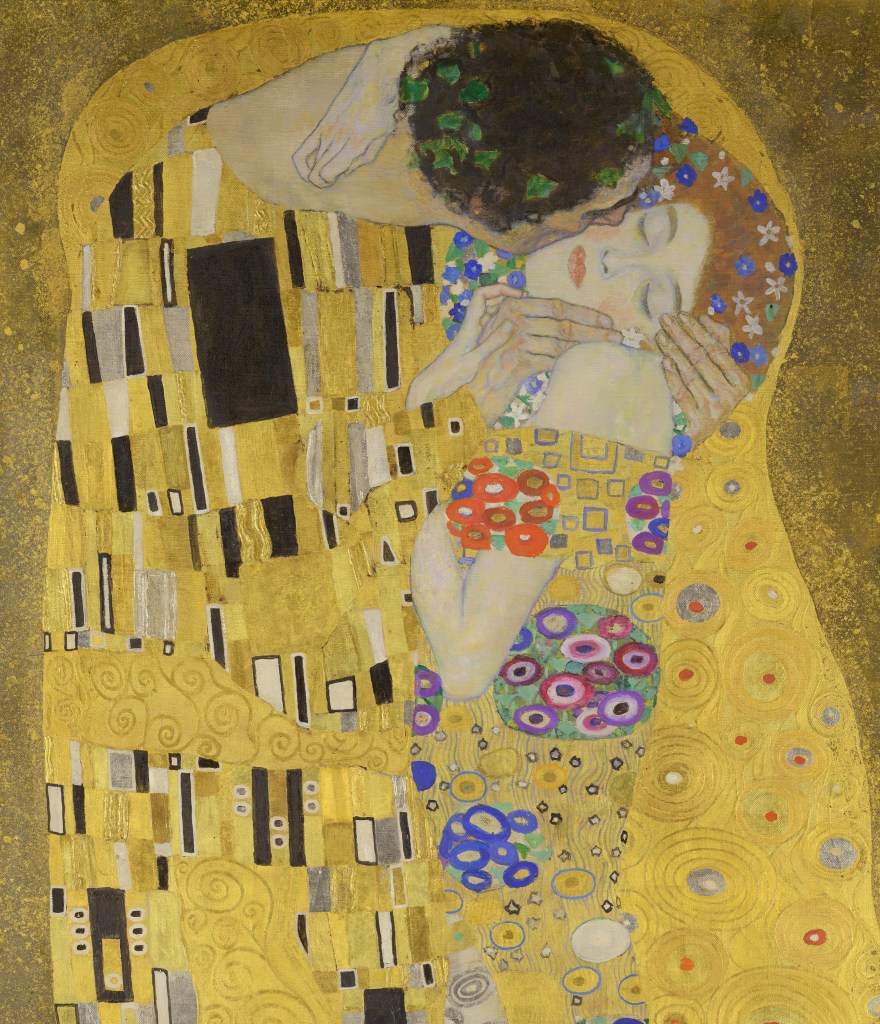
Many art historians believe that the female figure in The Kiss resembles Emilie Flöge, a fashion designer and Klimt’s close companion. Their long-standing relationship and her presence in other works by Klimt support this theory.
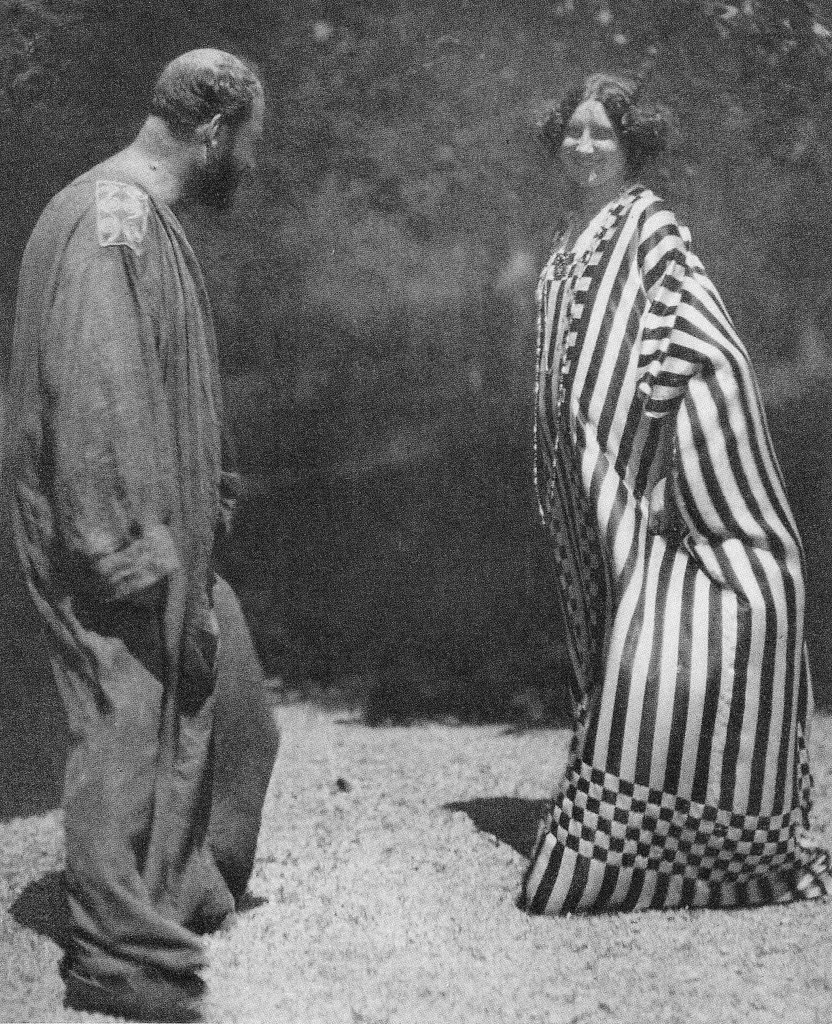
Another theory suggests that the female model could be Alma Mahler, the wife of composer Gustav Mahler. However, no concrete evidence confirms this, and it remains speculative.
There is also speculation that the male figure might represent Klimt himself, suggesting a self-portrait. This interpretation is based on the intimate nature of the painting and the artist’s known exploration of self-representation.
The Kiss Within the Vienna Secession and Art Nouveau
Gustav Klimt became one of the leading figures of the Vienna Secession, a branch of the Art Nouveau movement that challenged the conservative traditions of art. This group of painters, architects, and designers created a new, modern visual language emphasizing symbolism, ornamentation, and emotional depth over rigid academic realism. Klimt’s work stood at the heart of this rebellion. He abandoned traditional perspective and embraced flat, decorative surfaces, often filling his paintings with intricate patterns, symbolic imagery, and radiant gold leaf. His figures were sensual yet stylized, blending eroticism, mysticism, and dreamlike beauty.
Gustav Klimt’s The Kiss seizes the core of Art Nouveau in a single scene. The couple, embraced in shimmering gold, brings the movement’s flowing lines and sensuality to life. Through organic forms and detailed ornamentation, Klimt’s work highlights the main features of Art Nouveau examples. Let’s talk about this in more detail.
One of the most recognizable characteristics of Art Nouveau is its smooth, continuous line, which Klimt uses to merge figures and space. The couple’s robes flow in soft, intertwined shapes that echo the natural curves of the human body, while the surrounding lines suggest movement and life. This sense of unity is reinforced by the intricate decorative details: the glowing gold-leaf background creates an ethereal atmosphere, and the mosaic-like patterns on the robes add depth and texture. Rather than functioning as mere decoration, these elements turn the painting into a carefully crafted visual experience.
Beyond its formal qualities, The Kiss reflects the sensuality, symbolism, and emotional depth often associated with Art Nouveau. The couple’s embrace represents love and unity, but it also suggests a deeper, spiritual connection. Klimt balances organic forms with geometric patterns, contrasting the soft lines of the bodies with the angular motifs of the robes. The gold leaf binds these opposing elements together, creating a composition that feels both decorative and expressive, physical and transcendent.
Artenquire magazine has a full issue dedicated to the Vienna Secession, Art Nouveau, and Klimt.
Gold and Ornament in Other Klimt’s Works
While The Kiss remains Klimt’s most celebrated work, it is far from his only exploration of love, intimacy, and decorative beauty. His signature style, involving golden hues, intricate patterns, and deeply symbolic imagery, appears throughout his other masterpieces, each offering a unique perspective on human connection and passion.
Portrait of Adele Bloch-Bauer I (1907)

Portrait of Adele Bloch-Bauer I (1907) by Gustav Klimt is one of the most famous works of his Golden Phase. The painting shows a major art patron in fin-de-siècle (“end of the century”) Vienna, Adele Bloch-Bauer, surrounded by a rich surface of gold leaf, intricate patterns, and symbols inspired by Byzantine mosaics. While her face and hands are painted realistically, her body almost dissolves into decorative forms, blending figure and background. This contrast turns the portrait into both a personal likeness and a luxurious, timeless image.
The Tree of Life (1905–1909)

In The Tree of Life, Klimt transforms nature into a swirling, hypnotic vision, much like the embrace in The Kiss. This piece, part of the Stoclet Frieze, represents the intertwining of life’s forces—growth, love, and eternity. The branches spiral endlessly, much like the flowing robes of the lovers in The Kiss, reinforcing the idea of an unbreakable, cosmic bond.
The Beethoven Frieze (1902)
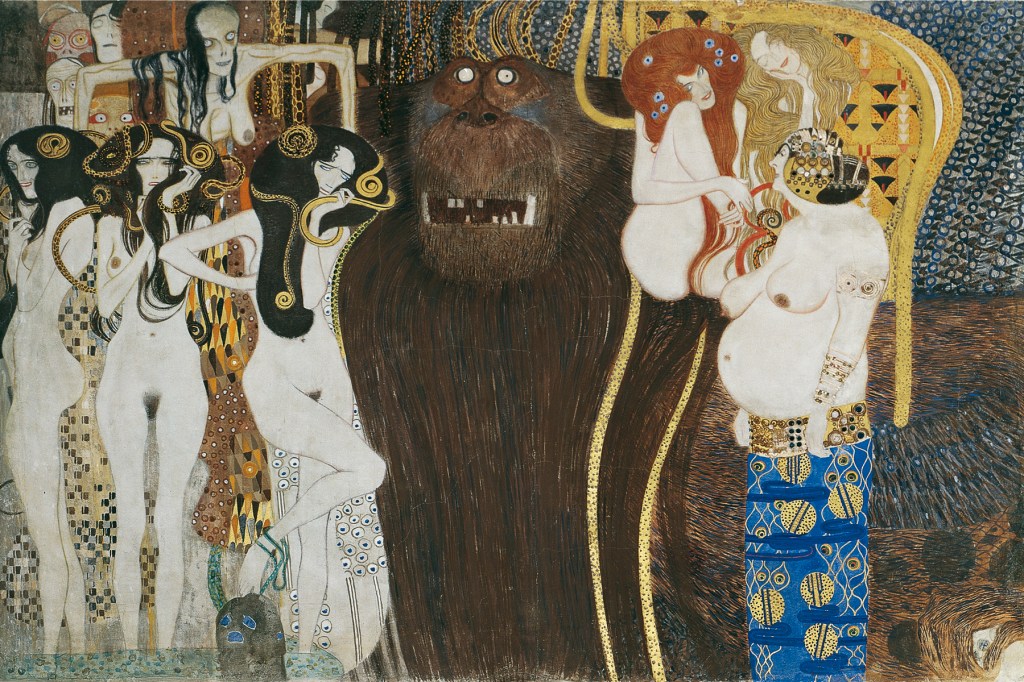
Created as a tribute to Beethoven, this grand mural captures the transformative power of love and art. The final panel, The Embrace, closely mirrors the sentiment of The Kiss, with a couple wrapped in golden patterns, symbolizing unity and transcendence. The frieze as a whole echoes the themes of struggle and ultimate redemption through love, a concept that Klimt would continue to refine in his later works.
Fulfillment (1905–1909): A Direct Counterpart to The Kiss

Part of The Stoclet Frieze, Fulfillment is essentially The Kiss in another form. A couple is locked in a passionate embrace, their bodies adorned with intricate geometric and organic motifs. Here, Klimt once again blends sharp, angular patterns with smooth curves—contrasting elements that create a striking visual harmony, much like in The Kiss.
Water Serpents I and II (1904–1907)
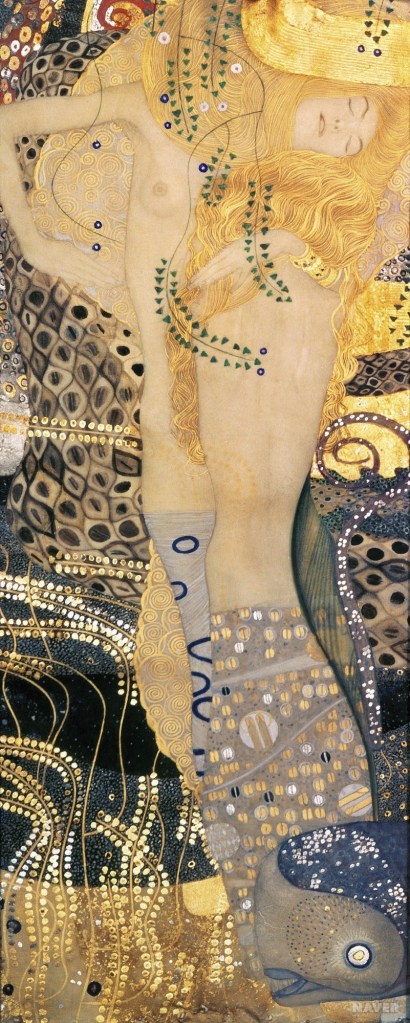

Water Serpents I and II share the sensuality and ornamentation of The Kiss. The figures intertwine in a fluid, otherworldly composition, their forms blending seamlessly into the golden, decorative surroundings. This work highlights Klimt’s fascination with beauty, intimacy, and the fusion of human bodies with nature’s rhythmic flow.
Gustav Klimt’s golden era was more than just an artistic phase because it celebrated love, sensuality, and the intricate connection between human beings. The Kiss may be the pinnacle of this vision, but his other works expand upon its themes. Each offers a different glimpse into Klimt’s opulent and deeply symbolic world.
 Artenquire