
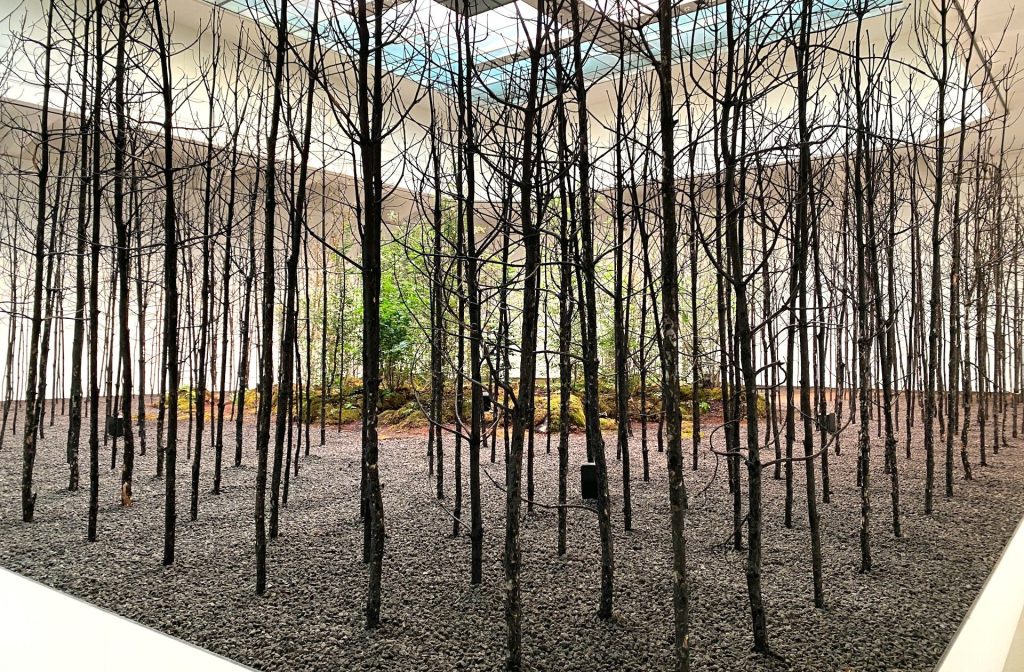
Arte Povera is an art movement that can sound mysterious at first, especially if you’ve heard the name but never quite understood what it stands for. The term itself means “poor art” in Italian, but this does not refer to low quality or lack of skill. Instead, it points to a deliberate choice to work with simple, everyday, often “non-art” materials to question what art is, what it should do, and whom it is really for.
The movement emerged in Italy in the late 1960s, a period of political unrest, student protests, rapid industrialization, and a growing sense of disillusionment with consumer culture. Italy was changing quickly, and many artists felt that art had become too polished, too commercial, and too closely tied to the art market and elite institutions. Arte Povera was, in many ways, a reaction against this. It was not a unified style or a strict program, but rather a shared attitude: a desire to strip art down to something more direct, more physical, and more honest.
Arte Povera artists often used materials that seemed deliberately humble or unstable, such as earth, stones, wood, rags, lead, glass, plants, fire, water, and even living animals. These materials carried their own histories and associations, and they resisted being turned into neat, permanent objects. This way, artists challenged the idea of the artwork as a precious, collectible commodity. They embraced change, decay, process, and unpredictability. Art was no longer just something to look at; it became something that existed in time, something that could transform or even disappear.
Arte Povera rejected artificial hierarchies. High art versus low materials, nature versus culture, tradition versus modernity — these oppositions were deliberately blurred. A pile of stones placed in a gallery, a neon light interacting with organic matter, or a block of ice slowly melting were not meant to shock for shock’s sake. They invited viewers to reconsider their expectations and to pay attention to basic forces, like gravity, energy, growth, and erosion. In this sense, Arte Povera was less about making statements and more about creating situations that encouraged awareness.
The movement was first named and theorized by the Italian art critic Germano Celant in 1967. He described Arte Povera as a way for artists to step outside established systems and regain a kind of freedom. Rather than mastering a specific style or technique, these artists focused on ideas, gestures, and relationships. The artwork could be fragile, temporary, or incomplete, and that was precisely the point. Meaning was not fixed; it emerged through the viewer’s encounter with the work.
Despite its emphasis on simplicity, Arte Povera is not “easy” art in a superficial sense. It often requires a shift in how we look and what we expect. There is rarely a clear narrative or message spelled out for us. Instead, we are asked to notice contrasts: organic materials placed next to industrial ones, ancient references appearing alongside modern technology, slow natural processes set against the speed of contemporary life. These tensions reflect the broader cultural questions of the time, but they remain relevant today.
Importantly, Arte Povera was never about nostalgia or a return to a pre-industrial past. While nature plays a significant role in many works, it is not idealized. Nature appears as something powerful, indifferent, and deeply entangled with people’s lives. The gallery was no longer a neutral container but an active environment in which materials interacted with space, light, and viewers.
Arte Povera also challenged the artist’s role. Instead of presenting themselves as isolated geniuses, many artists positioned themselves as facilitators or observers of processes. The artwork did not always feel “finished,” and its meaning was not fully controlled. This openness invited viewers to engage more actively, to think, feel, and question rather than simply admire.
Today, Arte Povera is recognized as one of the most important post-war art movements in Europe, influencing installation art, conceptual art, and environmental practices. Yet its spirit remains quietly radical. At its core, Arte Povera asks us to slow down and pay attention to what is usually overlooked. It reminds us that art does not need luxury materials or grand gestures to be meaningful.
In a world still driven by consumption, speed, and spectacle, Arte Povera continues to feel relevant. It offers a way of thinking about art not as an object to be owned, but as an experience which is rooted in material reality, human presence, and the fragile balance between nature and culture.
For those who want to encounter Arte Povera directly, the Pinault Collection in Paris is a strong place to start. Housed in the Bourse de Commerce, the collection brings together major Arte Povera works and places them in open, carefully designed environments where their physical presence, materials, and processes can be fully felt.
 Artenquire