Art Nouveau (late 19th and early 20th centuries) is an international style of art, architecture, and design. It is characterized by organic, flowing lines and intricate patterns inspired by natural forms. It aimed to create a harmonious and aesthetically pleasing environment, integrating art into everyday objects and architecture. This style emphasized craftsmanship and rejected the mass-produced goods of industrialization. The style often features elaborate decorative elements and motifs such as flowers, vines, and curvilinear shapes. Prominent in Europe and the United States, Art Nouveau influenced different forms of art, such as painting, jewelry, furniture, and architecture.
Art Nouveau Gallery
The Kiss (1907–1908) by Gustav Klimt

Here, intimacy turns into something timeless and ceremonial. Gold leaf flattens space and removes the figures from everyday reality, placing them in a world closer to icons or mosaics. The lovers seem absorbed into ornament, as if emotion itself has become pattern. In Klimt’s The Kiss, love appears universal, suspended outside time and place.
Judith and the Head of Holofernes (1901) by Gustav Klimt
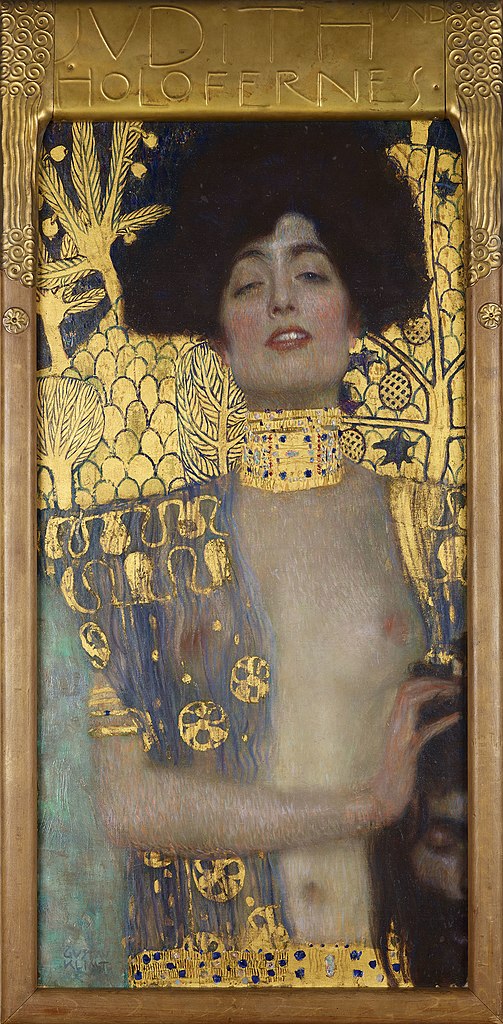
Judith is shown not as a moral heroine, but as a figure of power and seduction. Her calm expression contrasts sharply with the violence of the story. Decorative surfaces heighten her presence rather than distract from it. Klimt shifts the focus from narrative to psychological dominance.
Judith II (Salome) (1909) by Gustav Klimt
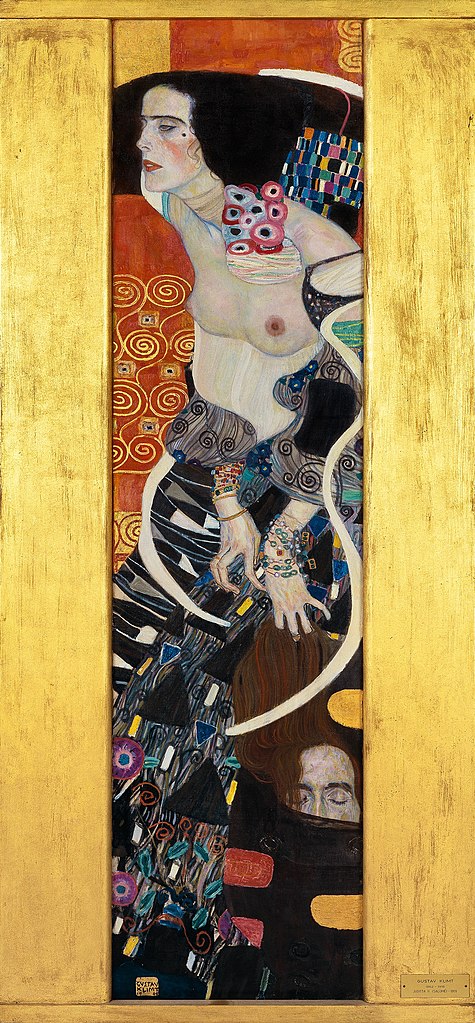
This later version feels darker and more fragmented. Sharp lines and broken forms replace the earlier sensual calm. Judith’s body appears tense, almost aggressive, turning desire into threat. Ornament now carries unease rather than pleasure.
Church at Cassone (1913) by Gustav Klimt

Unlike his golden works, this painting turns toward quiet observation. Forms simplify into blocks of color, while ornament remains subtle. The landscape feels calm and carefully structured, almost meditative. Even without overt decoration, Klimt’s sensitivity to surface and pattern still shapes the scene.
Stoclet Frieze, detail: Tree of Life (1905–1909) by Gustav Klimt

The tree spreads in spirals and curves, filling the space with rhythmic movement. Gold and pattern dominate, while symbolism replaces storytelling. Life, death, and renewal merge into a single decorative system. The work was designed as part of an interior, reinforcing Art Nouveau’s ideal of total artwork.
Four Seasons (circa 1896) by Alfons Mucha

Mucha personifies nature through elegant female figures linked to cyclical time. Flowing hair, floral motifs, and soft colors create a lyrical visual rhythm. The figures feel timeless rather than individual. Nature becomes decorative, poetic, and gently idealized.
Casa Vicens (Barcelona)

This is one of Gaudí’s earliest major works, where experimentation already takes center stage. Originally designed as a summer house for the Vicens family, it shows Gaudí’s interest in combining traditional Moorish tilework, Gothic elements, and vibrant natural motifs. The façade features colorful ceramics, floral patterns, and wrought-iron details that integrate structure and decoration seamlessly. Unlike his later, fully organic works, this house blurs the boundary between structure and decoration, reflecting both Gaudí’s innovation and the eclectic architectural trends of late 19th-century Barcelona.
Casa Batlló (Barcelona)
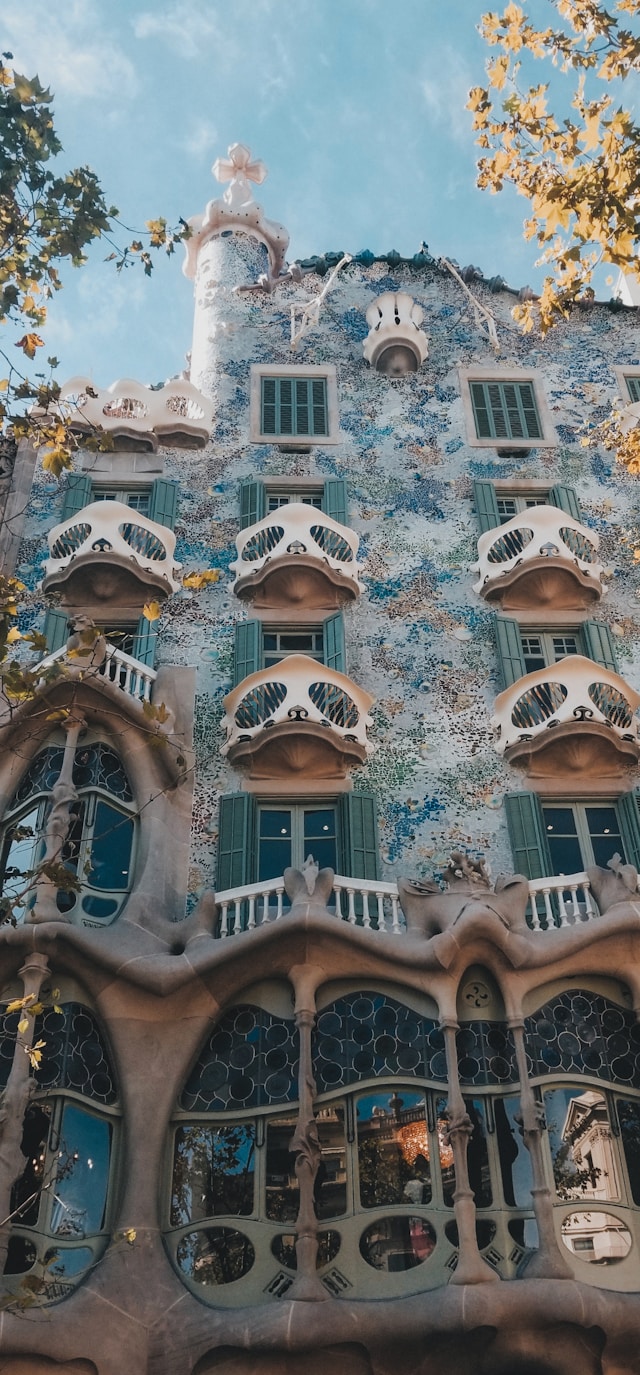
Built between 1904 and 1906, this house was commissioned by Josep Batlló, a wealthy textile industrialist, who wanted a modern, striking redesign of his existing building. Antoni Gaudí transformed it into a masterpiece of Catalan Modernisme, replacing rigid forms with organic curves, mosaics, and sculptural balconies. The façade evokes marine life and local legends, notably Saint George and the dragon, with bone-like columns and scale-like tiles. Gaudí integrated every element, from windows to furniture, to create a total work of art. It stands as a symbol of early twentieth-century innovation, combining craftsmanship, architecture, and fantasy in Barcelona’s urban landscape.
Source of the images: Wikimedia Commons, Public Domain licence
 Artenquire