Expressionism prioritizes inner experience over external appearance. Artists distort form, exaggerate color, and break natural perspective to convey anxiety, fear, desire, or spiritual tension. The movement developed in the early 20th century, especially in Germany, amid rapid industrialization, urban alienation, and growing political unrest. Groups such as Die Brücke and Der Blaue Reiter rejected academic tradition in favor of raw, personal vision. Modern life, war, and psychological isolation often shape the imagery. Art becomes a direct emotional statement rather than a visual record, where intensity matters more than accuracy.
Outstanding Expressionist Artworks
The Scream (1893) by Edvard Munch

This image turns anxiety into a universal symbol. The distorted figure and vibrating lines dissolve the boundary between inner emotion and outer world. Munch described the scene as a moment when nature itself seemed to scream, making the landscape part of the psychological crisis. The work became one of the most recognizable expressions of modern existential fear.
Anxiety (1894) by Edvard Munch

This painting presents a crowd moving forward with rigid, mask-like faces and hollow eyes. The figures seem trapped in a shared emotional state rather than individual identities. The blood-red sky links the work directly to Munch’s recurring theme of existentialism, also seen in The Scream. Anxiety here appears collective and unavoidable, turning a public space into a psychological landscape.
Red and White (1899–1900) by Edvard Munch

Here, color carries emotional meaning rather than natural description. The strong contrast between red and white intensifies the sense of tension and unease. Figures appear simplified and almost symbolic, as if reduced to emotional states. Munch treats human relationships as fragile and psychologically charged.
Street, Berlin (1913) by Ernst Ludwig Kirchner

The city appears sharp, restless, and overwhelming. Elongated figures and acidic colors convey a sense of alienation rather than urban excitement. Faces feel mask-like, stripped of individuality. Kirchner turns modern city life into a space of anxiety and emotional distance.
Death and the Maiden (1915) by Egon Schiele

The embrace between the two figures feels desperate rather than tender. Sharp contours and distorted anatomy heighten emotional vulnerability. Painted during the First World War, the work links intimacy with mortality. Love and loss appear inseparable.
The Dance of Life (1899–1900) by Edvard Munch
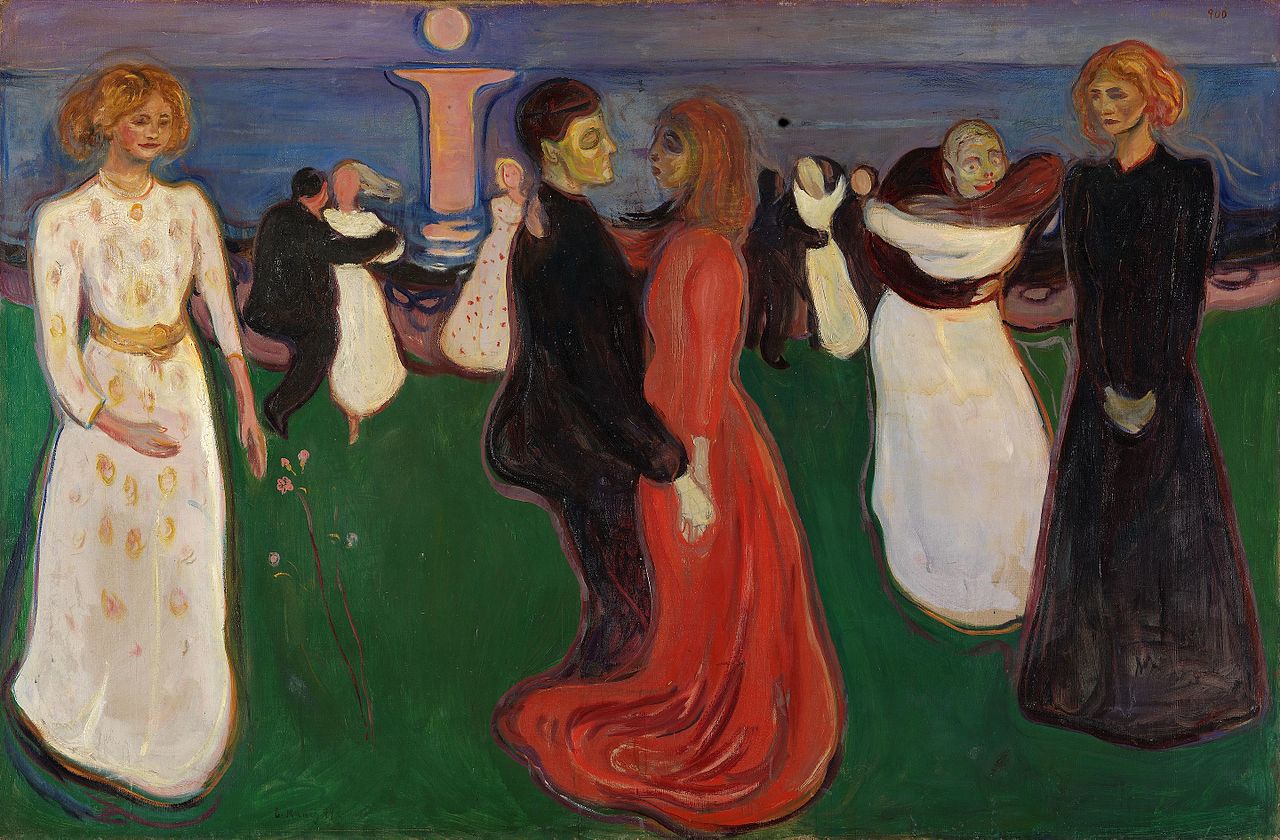
This painting presents human life as a symbolic cycle rather than a single moment. The figures move from innocence to passion and finally to isolation. Color and gesture guide the emotional rhythm of the scene. Life becomes a psychological journey rather than a narrative event.
The Large Blue Horses (1911) by Franz Marc
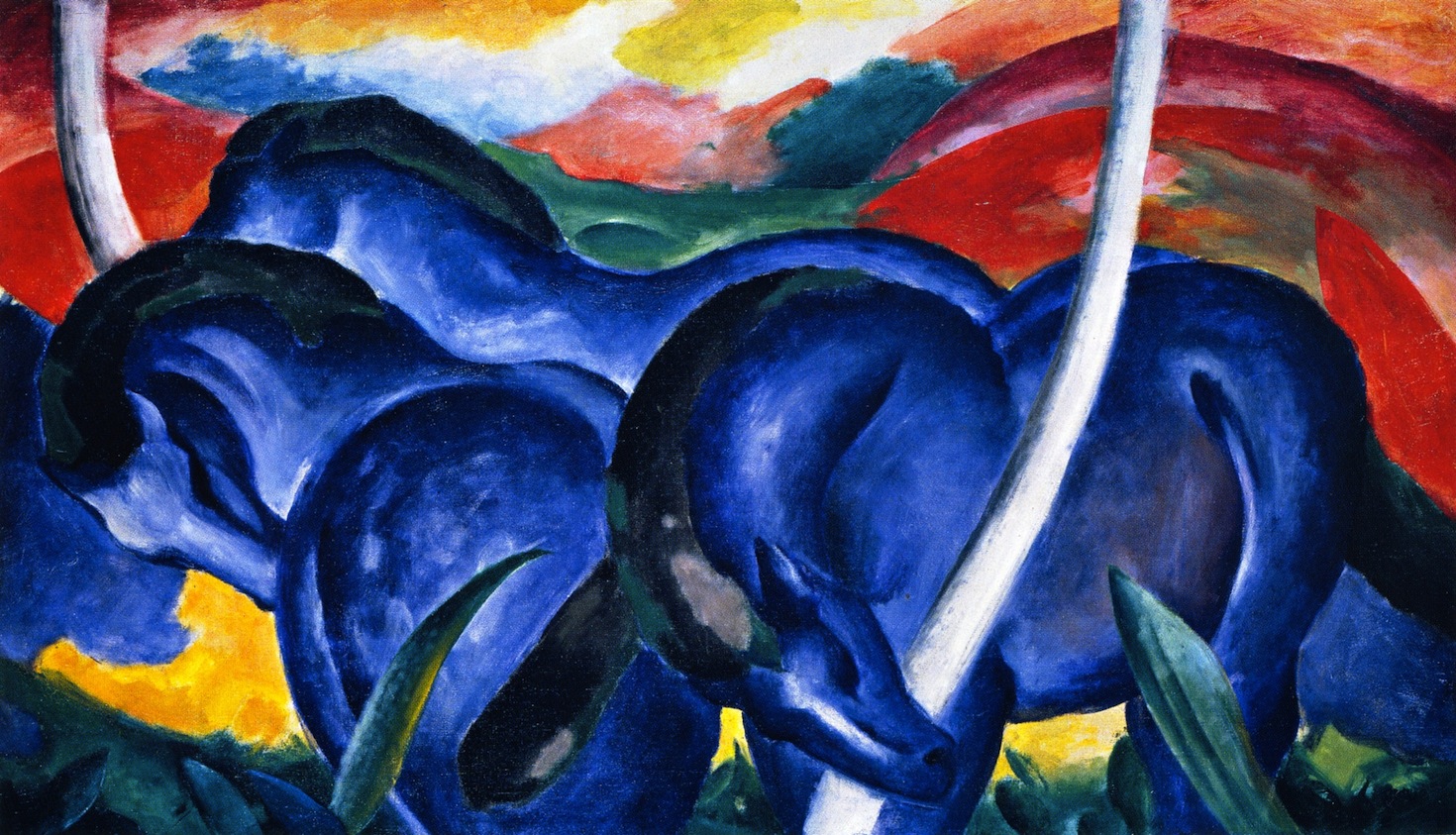
Marc paints the animals as calm, monumental presences, arranged in a gentle arc that suggests unity and harmony. Blue, which he associated with the spiritual and inner life, lifts the horses out of everyday nature and into a symbolic realm. Their simplified forms and rhythmic contours reduce individuality in favor of collective meaning. Nature here becomes a vision of purity, untouched by human corruption.
Self-Portrait with Model (1910) by Ernst Ludwig Kirchner
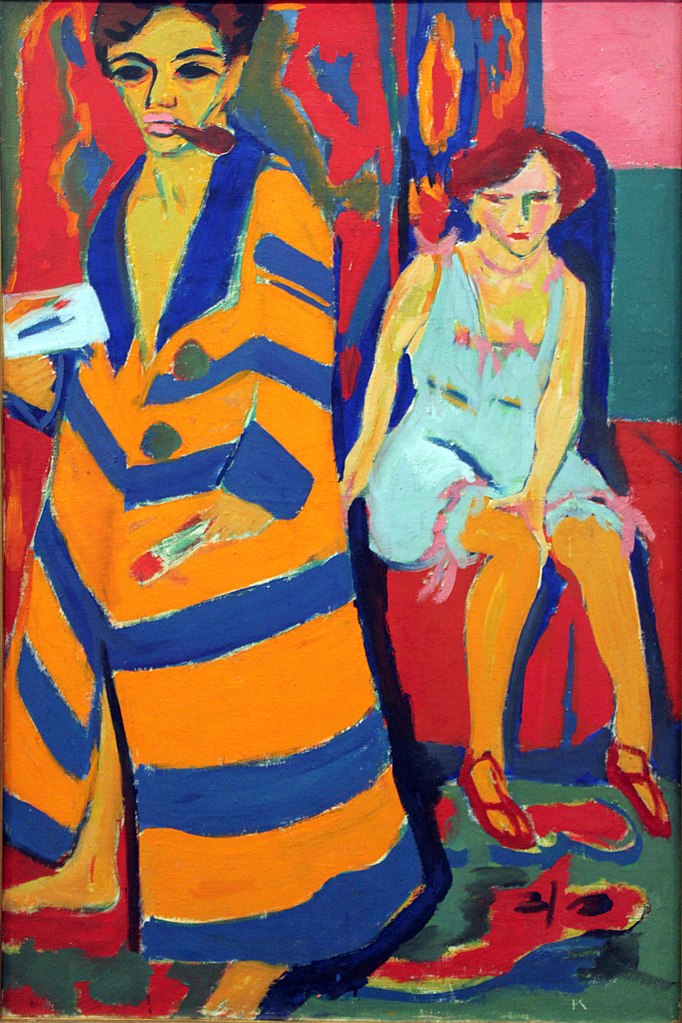
Kirchner shows himself as both creator and observer, tense and exposed. The model appears less individualized, almost secondary. Strong outlines and raw color intensify the sense of psychological strain. The painting suggests artistic identity as unstable and confrontational.
Nollendorfplatz (1912) by Ernst Ludwig Kirchner

This busy Berlin square feels fractured and disorienting. Architecture tilts and crowds merge into a restless mass. Movement dominates over clarity. The modern city becomes a space that overwhelms rather than liberates.
The Red Tree (1908–1910) by Piet Mondrian

Before turning to abstraction, Mondrian uses bold color to strip nature of realism. The tree’s unnatural red shifts attention from form to structure and rhythm. Nature becomes a framework rather than a landscape. This work signals his transition toward abstraction.
Fate of the Animals (1913) by Franz Marc

Violent diagonals and broken forms suggest chaos and destruction. Animals, often symbols of purity for Marc, appear trapped in a catastrophic world. Painted just before the First World War, the work feels prophetic. Nature reflects impending human violence.
Self-Portrait as a Soldier (1915) by Ernst Ludwig Kirchner

Kirchner depicts himself wounded, both physically and psychologically. The severed hand symbolizes creative paralysis and fear of artistic loss. Stark color and distortion intensify the sense of trauma. War here destroys identity as much as the body.
The Tower of Blue Horses (1913) by Franz Marc
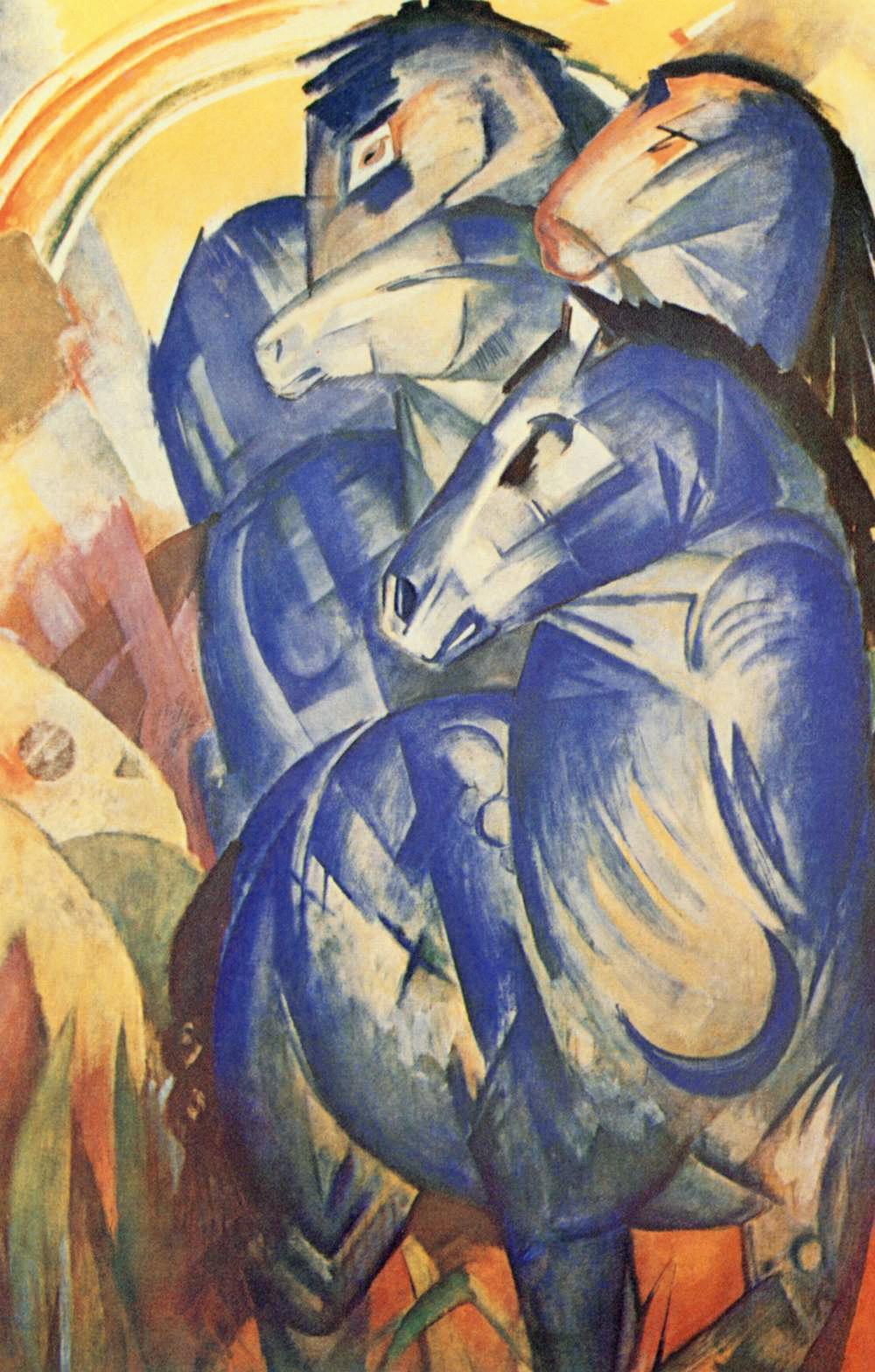
The monumental horses appear spiritual rather than naturalistic. Blue, for Marc, symbolizes the inner life and the masculine spiritual principle. The rigid vertical structure gives the animals a sacred, totem-like presence. Nature becomes a vision of harmony beyond the human world.
Source of the images: Wikimedia Commons, Public Domain licence
 Artenquire