
Futurism emerged in Italy in 1909 with Filippo Tommaso Marinetti’s manifesto and rejected tradition, museums, and the past in favor of machines, cities, and industrial power. Futurist artists focused on capturing motion itself, often showing multiple moments at once. Noise, force, and rhythm replace calm observation. Art becomes an expression of progress, dynamism, and modernity.
Futurism Art Gallery
The City Rises (1910) by Umberto Boccioni

This painting presents urban construction as a violent surge of energy. Human figures, horses, and buildings merge into a single mass of movement. The city appears alive, growing through force and struggle. Boccioni transforms labor into a symbol of modern power.
Sail: In Two Movements (1919) by Charles Demuth
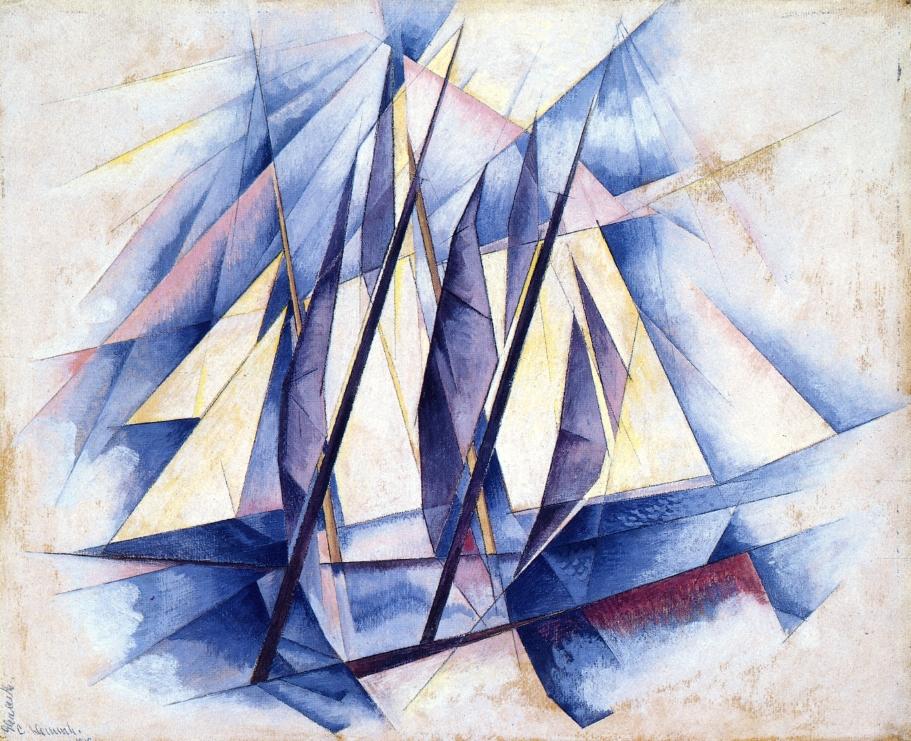
Demuth breaks the image of a sail into sharp, rhythmic planes. Motion feels mechanical and precise rather than expressive. The composition suggests movement through repetition and fragmentation. Futurist ideas blend with American Precisionism.
Elasticity (1912) by Umberto Boccioni
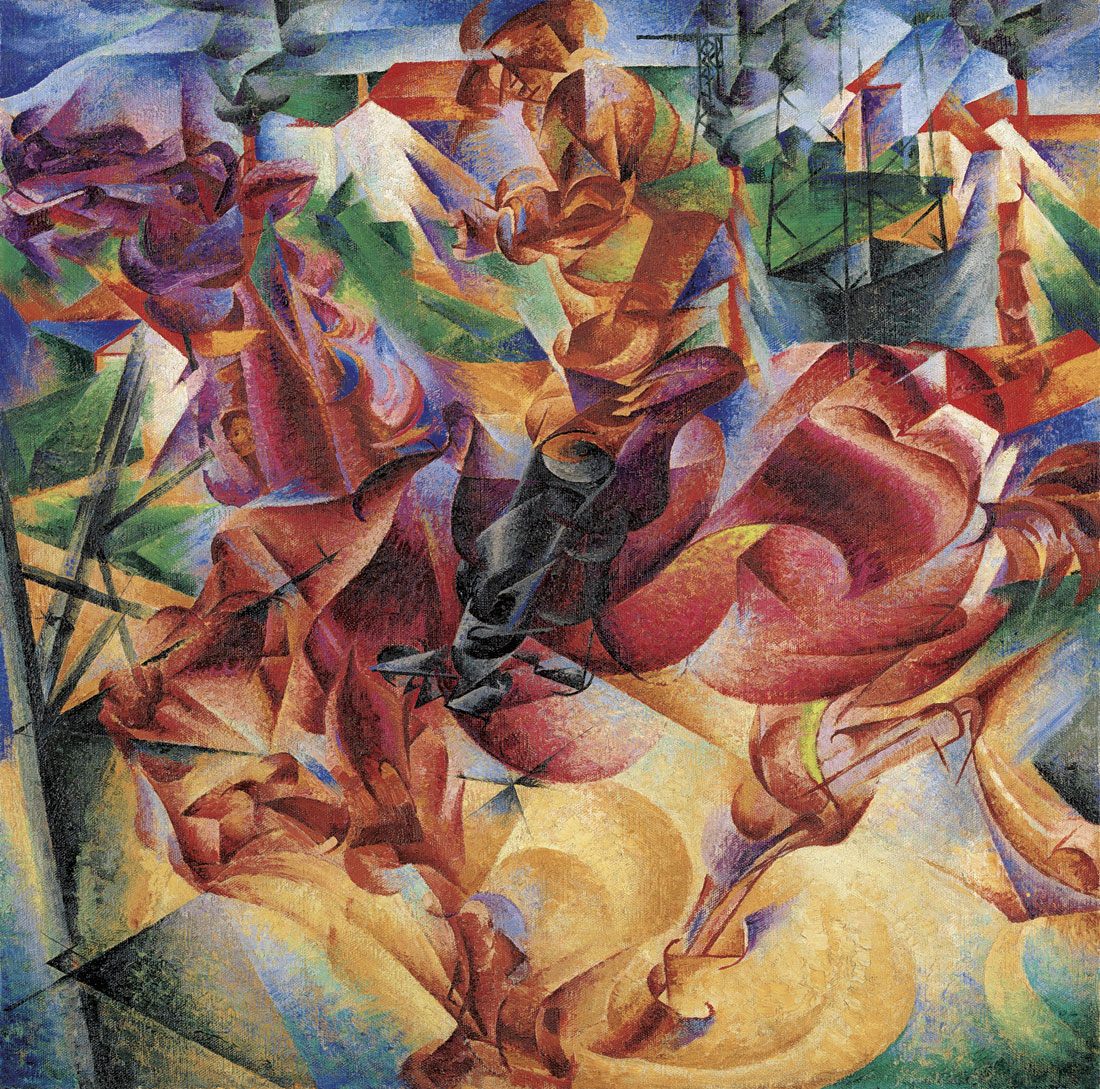
A galloping horse and rider dissolve into vibrating forms. Solidity disappears in favor of force and momentum. The painting seeks to show energy extending beyond physical boundaries. Movement becomes the true subject.
Brooklyn Bridge (1919–1920) by Joseph Stella

The bridge towers like a modern monument. Steel, cables, and lights form a dramatic, almost spiritual structure. Stella presents engineering as sublime. Technology replaces nature as a source of awe.
Battle of Lights, Coney Island, Mardi Gras (circa 1913–1914) by Joseph Stella

Electric lights explode across the canvas in a chaotic celebration. The amusement park becomes a sensory overload of color and motion. Structure dissolves into rhythm. Modern entertainment appears ecstatic and overwhelming.
States of Mind II: The Farewells (1911) by Umberto Boccioni

This work captures emotional movement rather than physical speed. Figures, trains, and space overlap, expressing separation and tension. Personal feeling merges with industrial motion. The painting links psychological states with modern travel.
Dynamism of a Cyclist (1913) by Umberto Boccioni

The cyclist breaks apart into repeated arcs and forms. Body and machine merge into a single system of movement. The image denies stillness entirely. Motion itself becomes identity.
Source of the images: Wikimedia Commons, Public Domain licence
 Artenquire