
Romanticism centers on emotion, imagination, and individual experience rather than order or restraint. It breaks away from the structured and rational approach of the Enlightenment, focusing instead on the raw and wild aspects of life. Artists favor dramatic landscapes, intense movement, and expressive forms to convey feeling and mood. Nature often appears powerful or overwhelming, serving as a mirror of inner states. Subjects include passion, freedom, fear, and the sublime, placing personal emotion above reason or moral instruction. Painting and sculpture emphasize atmosphere, texture, and expressive gesture to create a strong emotional response.
Romanticism Art Gallery
Wanderer above the Sea of Fog (circa 1818) by Caspar David Friedrich

This solitary figure standing before a vast, mist-covered landscape holds a storm of emotions. The man faces away from the viewer, inviting reflection — his expression is hidden. The scale of nature dominates the scene, suggesting awe and uncertainty. Friedrich presents nature as a space for inner contemplation and emotional experience.
La Liberté guidant le peuple (1830) by Eugène Delacroix
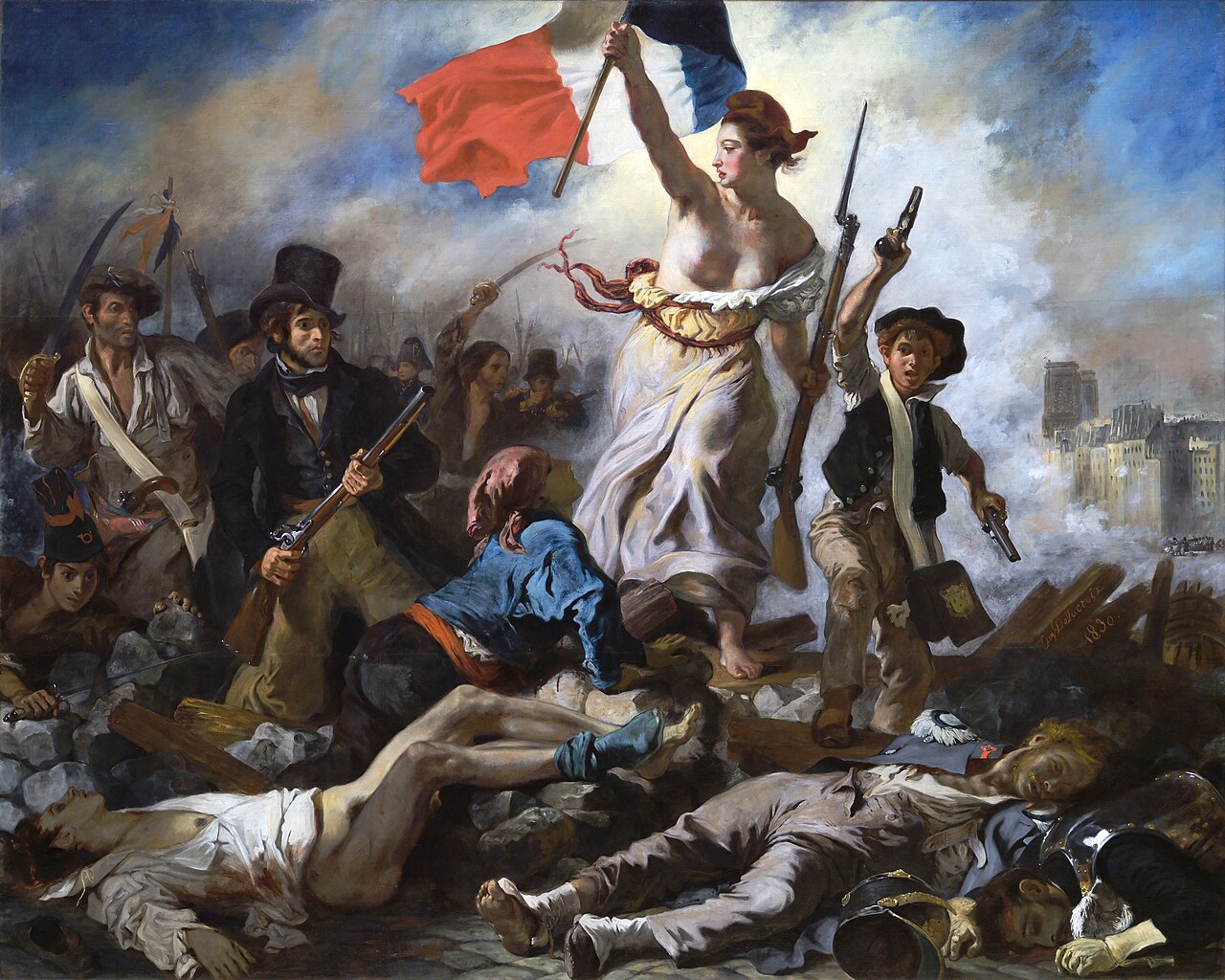
Liberty appears as a powerful allegorical figure leading people over the barricades. Dynamic movement, bold color, and dramatic contrasts give the scene urgency. Figures from different social classes join the struggle, creating a sense of collective emotion. Delacroix turns political revolution into a symbol of passion and freedom.
The Nightmare (1781) by Johann Heinrich Füssli

A woman lies in disturbed sleep while a dark creature sits on her chest. The composition creates tension through exaggerated contrast and unnatural poses. The scene draws from fear, imagination, and the subconscious. Füssli places psychological terror above realism or moral instruction.
The Hay Wain (1821) by John Constable

A rural landscape shows everyday life in the English countryside. Careful observation of light, weather, and vegetation gives the scene authenticity. The painting values personal memory and emotional attachment to place. Constable presents nature as familiar and deeply felt.
Ophelia (circa 1851) by John Everett Millais

Ophelia floats in water at the moment of her death. Detailed rendering of plants contrasts with the stillness of the figure. The scene combines beauty with tragedy. Millais emphasizes emotion and symbolism through natural detail rather than dramatic action.
The Kiss (1882) by Auguste Rodin

The embrace of these two figures hints at intense closeness. Rough surfaces and shifting forms emphasize physical sensation and emotion. The sculpture avoids idealized calm in favor of immediacy and desire. Rodin treats the human body as an expressive medium rather than a classical model.
Source of the images: Wikimedia Commons, Public Domain licence
 Artenquire